
For years, San Francisco Zoo officials have described the zoo’s problems as temporary — a bad season, a rough pandemic hangover, a few unlucky headlines.
But new numbers now tell a different story.
Last year, the San Francisco Zoo posted a $6.3 million operating loss and a $5.5 million drop in net assets — nearly $12 million gone in a single year. Attendance remains about 40% below pre-2019 levels, down 11% last year alone, despite the return of tourism and the city’s broader recovery.
That combination — falling attendance and deepening losses — is what economists call structural decline. It doesn’t fix itself with marketing campaigns or new exhibits. It points to a model that no longer matches public demand.
This week, for the first time, we can measure just how wide that gap has become.
A new independent poll of 1,000 Bay Area voters shows:
76% want the zoo site reimagined into something new
57% oppose keeping wild animals in captivity
59% oppose bringing pandas to San Francisco
These are not fringe views. They are supermajorities — crossing age, political, and geographic lines.
Put the two pictures together:
On one side, a zoo losing nearly $12 million a year, drawing fewer visitors, and facing hundreds of millions in deferred capital needs.
On the other, a public that has quietly moved on from the idea that a traditional zoo is what this land should be.
What’s striking isn’t just that opinions have shifted. It’s that the shift is already showing up in behavior.
People are voting with their feet.
Families are choosing other destinations. Tourists are skipping it. School trips are shrinking. Revenue follows attention — and attention has been drifting away for years.
Yet city leaders will soon be asked to approve another generation of investment in the same basic model: patch the exhibits, import new animals, and hope attendance rebounds.
The poll suggests that rebound is unlikely.
San Franciscans don’t want a slightly improved version of the old zoo. They want something fundamentally different: more nature, more science, more public access, more climate education — and fewer animals living out their lives behind concrete and metal.
That is the context for why we are announcing the launch of EcoPark SF this week.
Read: It’s time to tear down the San Francisco Zoo. Here’s what should go in its place in the SF Standard
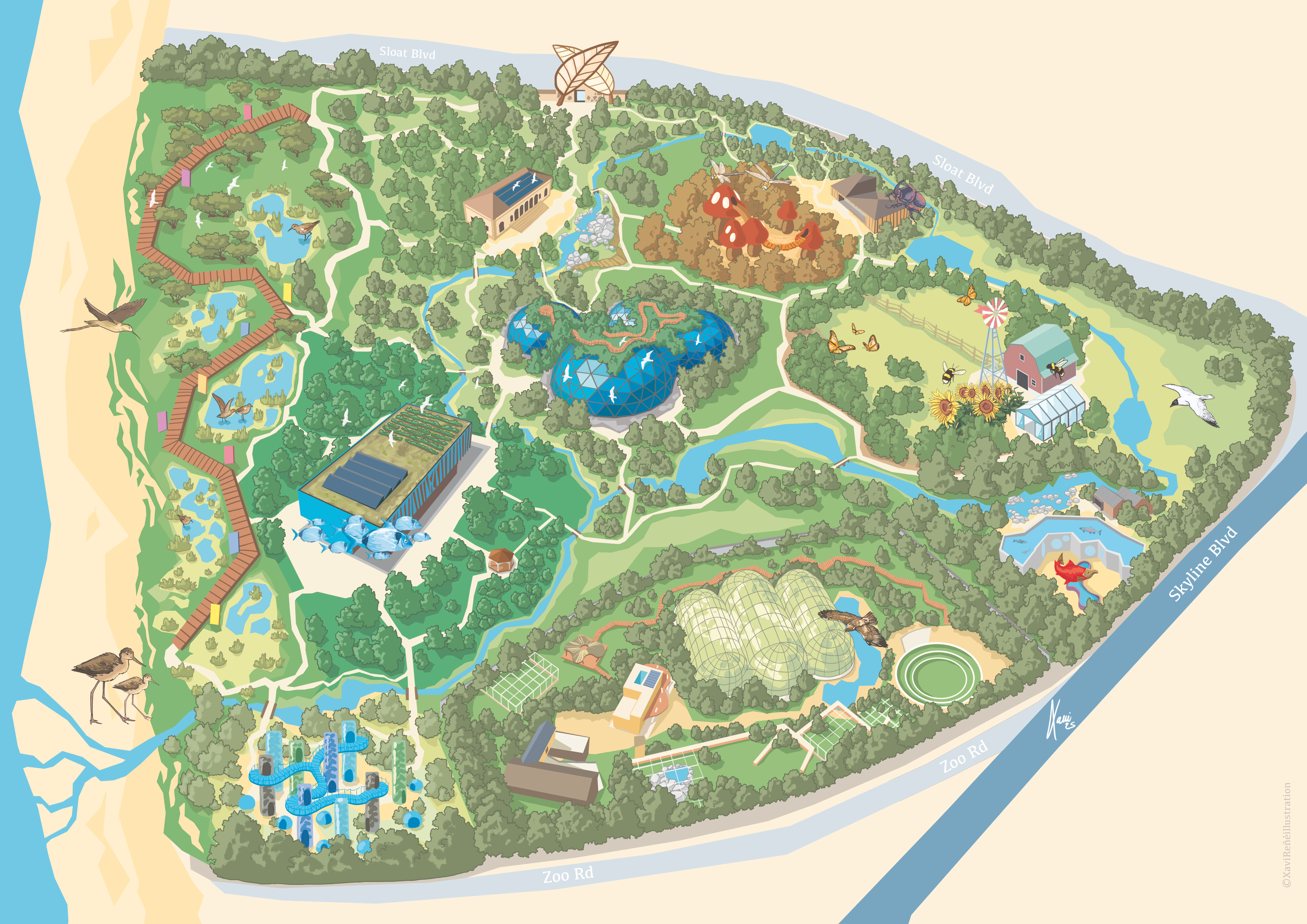
A coalition of local advocates, designers, educators, and former zoo professionals worked together to create a full proposal to transform the 100-acre zoo site into a climate-resilient public ecological park built around restored wetlands, native habitat, wildlife rescue, and hands-on science education.
The plan replaces the traditional zoo model with:
large-scale coastal habitat restoration
a California wildlife rescue and recovery campus (closed to public view)
immersive climate and ocean science facilities
public gardens, trails, and outdoor classrooms
and education programs tied directly to local ecosystems
In other words: a place designed for how people — and science — actually think about nature in 2026, not 1936.
Whether EcoPark SF is the final answer or not, its emergence reflects something real: the debate has shifted.
This is no longer a question of how to save the zoo.
It’s a question of what should replace it.
The financial data is already flashing red.
The public opinion data is now unambiguous.
Together, they tell the same story.
San Francisco is being asked to decide whether to spend the next decade propping up a shrinking institution — or to use this rare 100-acre coastal site to build something that matches modern science, public values, and the realities of climate change.
The zoo is losing money.
The public is losing patience.
And for the first time, there is a serious alternative on the table.