
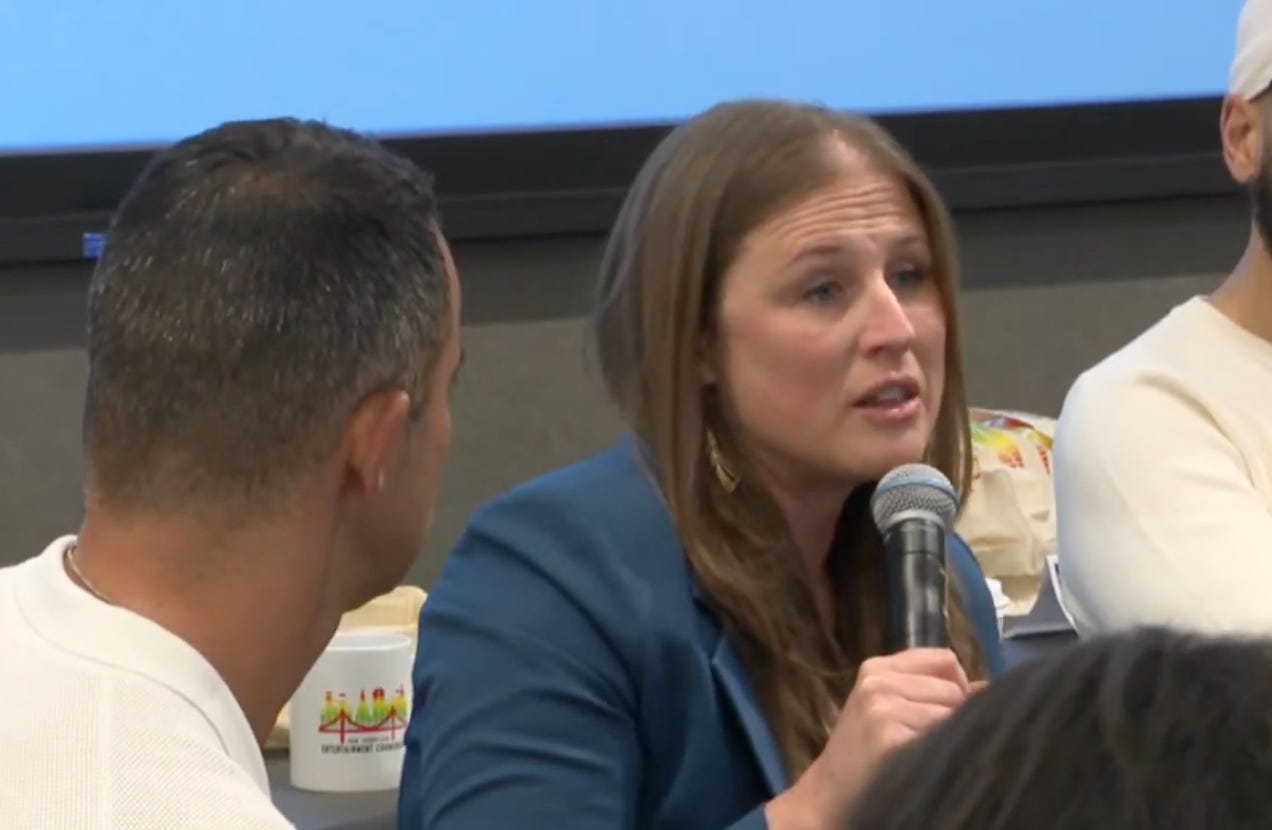
Today the San Francisco Zoo named Cassandra Costello as its permanent CEO — a decision made by the San Francisco Zoological Society and backed by City Hall.
What matters isn’t simply who was chosen. It’s what this choice reveals.
Costello has deep City Hall roots and experience inside municipal systems. She understands tourism, public agencies, and political navigation. What she does not bring is a demonstrated track record in progressive animal welfare reform, conservation-first transformation, or leading a zoological institution through ethical reinvention — precisely the kind of leadership this moment demands.
And that’s the point.
This appointment comes after years of well-documented instability: repeated animal welfare concerns, infrastructure failures, employee unrest, multimillion-dollar operating deficits, and a prior director who exited under intense controversy. Those were not isolated incidents. They were symptoms of institutional drift.
Faced with that record, the Zoological Society chose continuity.
Stability over transformation.
On the very same day, Monterey Bay Aquarium announced that Dr. Jenny Gray — a global leader in modern zoo ethics and conservation — would take the helm there. Gray spent nearly two decades transforming Zoos Victoria in Australia into a conservation-first institution recognized internationally for fighting wildlife extinction. She has led global associations, published on ethical frameworks for captivity, and helped redefine what a 21st-century zoological organization can be.
That is what ambitious reform looks like — from an institution already beloved by the public for its scientific leadership, conservation impact, and uncompromising commitment to animal welfare.
Instead of structural reform, San Francisco reaffirmed the very system that produced years of controversy and animal neglect. Dressing the zoo up as a “cultural institution” masks the deeper debate: Is this about tourism optics, or about ethical leadership and conservation impact?
Costello’s dismissal of bold proposals like EcoPark SF as “fanciful” and “unrealistic” signals something deeper than disagreement. It signals institutional defensiveness. A reluctance to even entertain structural evolution.
But this isn’t just about one CEO.
It’s about the operator.
The San Francisco Zoological Society has had decades to demonstrate responsible stewardship. Instead, the record shows secrecy, governance friction, financial instability, and repeated controversy. When a nonprofit operator presides over long-term decline, the solution is not internal reshuffling.
It is accountability.
The zoo is a public asset. It sits on city land. It receives public trust. And when that trust erodes, the city has a responsibility to act.
Other cities recruit mission-driven operators aligned with modern standards. The Conservation Society of California, which runs Oakland Zoo, has built a nationally respected model centered on welfare and conservation impact. Monterey Bay recruits global reformers. Institutions evolve when cities demand evolution.
San Francisco should do the same.
This moment was an opportunity to signal bold change.
Instead, the message was: stay the course.
If we want something different for the next 100 years, we cannot ask the same structure that produced the last disastrous 20 years to reinvent itself.
Real reform requires new stewardship.
It’s time for SF to end it’s contract with the San Francisco Zoological Society.